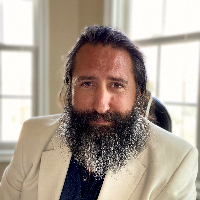
Profile / United States
Prof. Randolph (Randy) Beasley, LMFT
California
Prof. Randolph Beasley LMFT - Relationships and Mood
See online therapy options- CBT for thoughts and behaviors
- DBT skills for emotion regulation
- Gottman methods for couples
About Randolph
Prof. Randolph (Randy) Beasley is an LMFT licensed in Alaska and California with five years of experience. He focuses on stress, anxiety, relationship concerns, bipolar disorder, depression, addictions, trauma and abuse, grief, parenting, and related issues. Randy describes his practice as goal-oriented and client-centered, and he works directly with people to set practical goals and change unhelpful patterns.
Randy trained first in business and theology before completing a Master of Arts in Marriage and Family Therapy at Touro University. He has worked in community clinics, substance use treatment settings, a state hospital, and jail environments. His background also includes roles as a pastor and camp director, where he developed curriculum and taught groups.
In sessions he uses clear, structured methods. He draws on Cognitive Behavioral Therapy to name and test unhelpful thoughts and behaviors. He also uses client-centered techniques to listen and DBT-informed skills for managing strong emotions. The Gottman Method and existential ideas appear when relationship patterns and life meaning are central concerns.
Randy emphasizes practical steps over abstract talk. He helps people set measurable goals, try different responses, and notice what changes. He often works on communication, coping skills, relapse prevention for addictions, and strategies for mood stability.
People who prefer straightforward, action-focused work may find his style a fit. He also accepts clients internationally and conducts sessions in English. Before booking, confirm the current session options and formats offered.
How his approaches translate to online work
Randy combines Cognitive Behavioral Therapy, Client-Centered Therapy, and Dialectical Behavior Therapy in clear, practical ways. CBT focuses on spotting and testing thought patterns and building new behaviors to ease symptoms like anxiety or depression. Client-Centered Therapy emphasizes listening and reflecting so a person can describe problems and goals in their own words. DBT contributes specific emotion regulation and distress-tolerance skills that can be practiced between sessions.Choosing the right approach is part of the work. He works with clients to identify what methods fit their goals, needs, and preferences. That decision is collaborative and can shift as progress is made or new issues arise.
Session logistics should be confirmed before booking, since formats were not specified in the biography. Ask which session formats are currently offered when you schedule. Online sessions can make it easier to fit therapy into a busy life - they can reduce travel time, allow shorter check-ins during a busy day, and let people use techniques in the settings where problems happen. Licensed professionals can guide how to practice skills between sessions and help adapt exercises so they work in everyday routines.
Areas of expertise
Primary focus
Also works with
Additional focus areas
Therapeutic approaches
Experience
5+ years
Listed in
California, Alaska
Languages
English
Frequently asked questions
What kinds of concerns does he help with?
He works with stress, anxiety, depression, bipolar issues, addictions, trauma and abuse, grief, relationship and parenting concerns, and related topics listed in his specialties.
How does he use Cognitive Behavioral Therapy?
He uses CBT to identify unhelpful thoughts and habits, test new ways of thinking, and build behaviors that support goals.
What is his therapeutic style like?
His approach is goal-oriented and client-centered, focusing on clear steps, practical skills, and measuring progress together.
What training and background does he bring?
He holds a Master of Arts in Marriage and Family Therapy, has five years of clinical experience, and has worked in clinics, substance use treatment, a state hospital, and jail settings.
Where is he licensed and what language does he use?
He is an LMFT licensed in Alaska and California and conducts sessions in English.
Can he work with international clients?
Yes, he accepts international clients; confirm any regional details during intake.
How does payment and cost work?
Cost varies with location; sessions use a subscription model that can be canceled at any time.
How do I get started with him?
Select the See online therapy options button, complete a short matching questionnaire, and schedule a first session.
Details come from information the therapist supplied to BetterHelp. A license can be checked with the state board.
Online talk therapy is not emergency care. If you are not safe, use the crisis numbers.